
How to Seal a Window Frame
Cold draughts, rising energy bills, and water damage are all signs that your window seals need attention.
That’s why our team at TotalSeal Repairs have put together this guide to keep your windows performing at their best this winter.
Why Sealing Window Frames Is Important – By Window Repair Experts
Did you know that gaps around windows can increase your energy bills by up to 25%?
That’s a lot of money to be escaping through tiny cracks.
But that’s not the only issue. These tiny gaps allow water residue to seep in, leading to damp patches, mould growth, and the threat of serious damage to your window frames and interior walls. They also let in unwanted noise from outside, making your home less peaceful.
You can avoid this altogether with proper window sealing, which helps keep your home warmer, secure, and quieter. This can be one of the ways you can help stay warm without relying on your home’s central heating.
Tools and Materials You’ll Need
There are a few basic supplies you’ll need to gather before starting your task:
Materials to Reseal a Window
- Silicone sealant or caulk appropriate for your window type
- Masking tape
- Clean cloths
- Isopropyl alcohol or dedicated cleaner
- Old newspaper or drop cloth
Tools to Seal Your Windows
- Caulking gun
- Putty knife or scraper (for removing old sealant)
- Utility knife
- Sealant smoothing tool (or your finger)
Step-by-Step Guide to Seal a Window Frame
1. Remove Old Sealant
First remove any window displays on the sill to protect from damage.
One the area is clean, you will then need to get rid of any old, deteriorated sealant around the window panes.
It is best to use a putty knife or a scraper for this job. For any stubborn bits of old sealant, a sharp utility knife can be helpful.
Throughout this stage, you must be careful not to scratch or damage the window frame. Make sure all of the old sealant is completely removed so that the new layer can adhere properly and create a lasting seal.
2. Clean the Area Thoroughly
Once all the old sealant has been removed, clean the area.
We recommend using isopropyl alcohol (also known as rubbing alcohol) or a specialist cleaner to remove any traces of grease, dust or residue. Even invisible specks of dirt can prevent proper adhesion, creating future draughts.
Moisture residue can also prevent a good seal, so give the area at least an hour of drying before continuing on to the next step.
3. Apply Masking Tape
For a professional and straight finish, use masking tape along both sides of the gap. The tape also works to stop excess sealant from making a mess of your window frames and walls.
4. Prepare Your Sealant and Caulking Gun
Now for the preparation of your materials.
Start by cutting off the tip of your silicone tube using your utility knife, and securely screw on the nozzle.
Next, pull back the plunger of your caulking gun as far as possible and insert the silicone tube. Gently push in the plunger so it is secure in the cartridge.
Give the handle a gentle squeeze to check that the sealant flows smoothly from the nozzle onto your desired surface.
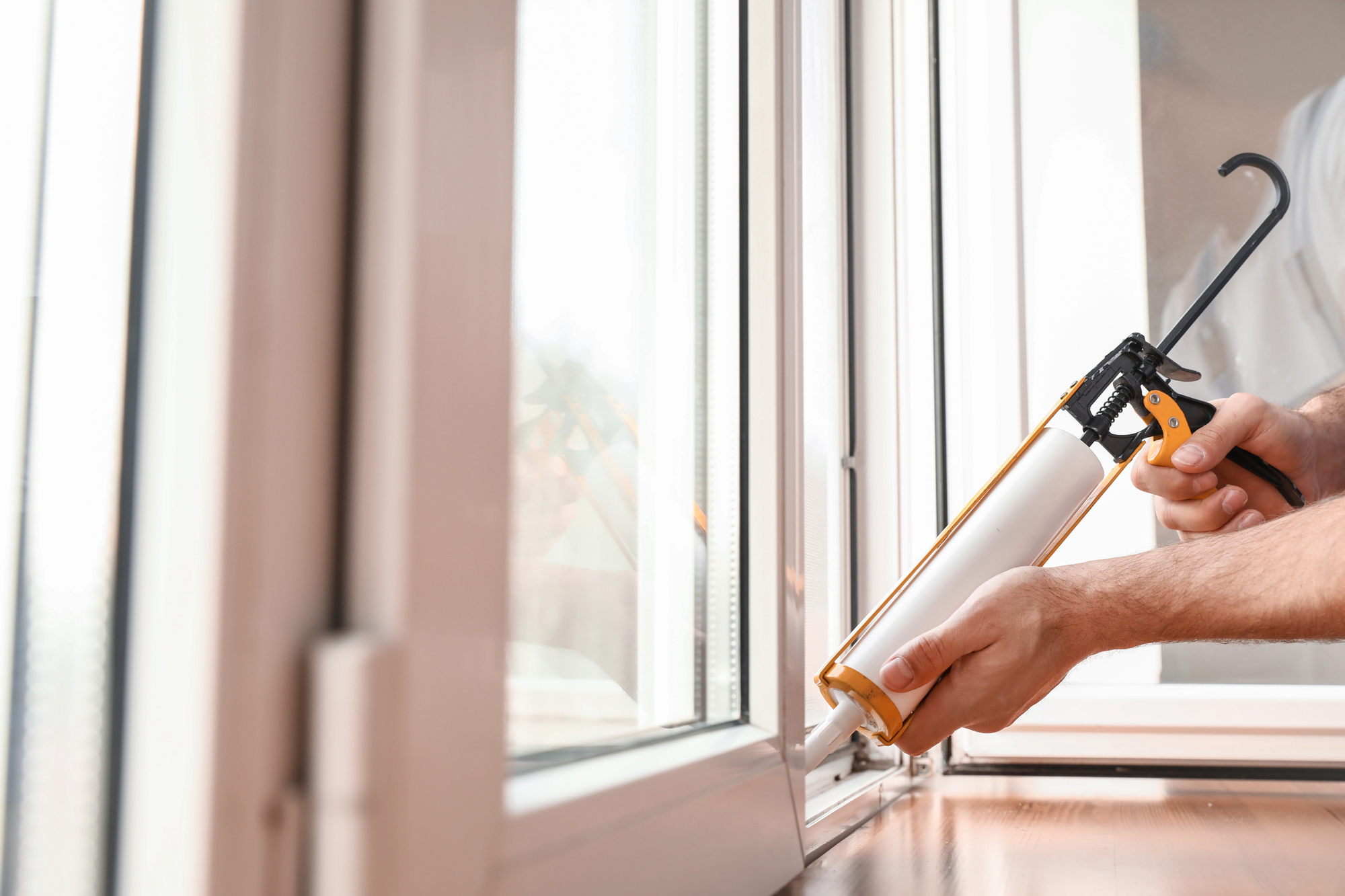
5. Apply the New Sealant
Hold your caulking gun at a 45-degree angle to the gap and apply steady, even pressure as you move along.
Maintain a consistent pace so that the sealant has uniform thickness.
6. Smooth the Sealant
Before the sealant begins to set, you’ll need to smooth it out for a professional finish.
Although there are professional smoothers on the market, a dipped finger in soap water can help as a cheap hack.
7. Remove the Masking Tape
Remove your masking tape while the sealant is still wet, pulling it away at a 45-degree angle to avoid disturbing your sealant. This will help create a clean, sharp edge.
Choosing the Right Sealant for Window Frames
Different situations call for different products, here is our brief guide about which product is right for your window.
Silicone Sealant
This is the go-to product for most window sealing jobs. It offers a flexible, waterproof seal that can work both inside and outside.
If you have uPVC windows, make sure to use a silicone sealant that is specially designed for your frame to prevent any chemical reactions that may cause damage.
Acrylic Caulk
This works well for interior window sealing, especially if you want to paint it over later.
It is not as durable or flexible as silicone sealant, so we advise against using it on exterior windows.
Hybrid Sealants
These new and popular sealants offer fantastic adhesion, good flexibility and strong UV resistance. They can be particularly effective when working with aluminium window frames, as they bond to the metal surface.
For Professional Window Sealing – Contact TotalSeal Repairs
For a guaranteed result and excellent draught proofing, hire in the experts.
At TotalSeal Repairs, we have been helping homeowners draughtproof their windows for years. Our team has access to commercial-grade sealants and equipment that deliver more durable results than DIY solutions
With our experience and expertise, we can identify and repair even the hardest-to-reach areas, ensuring your windows are properly sealed and your home stays warm and energy-efficient all winter long.
For a free no-obligation quote, contact our team today on 0141 280 4089.