How to Replace a Double Glazed Window
Search “how to replace a double glazed window” and you’ll find guides on stripping out a whole frame.
On the call-outs we attend for exactly this problem, it’s almost always the glass that’s failed, not the frame.
Misted panes, cracked glass, and failed seals all look like a window problem, and all three can push your energy bills up.
In nearly every case, the frame is fine and only the glass needs replacing.
Here’s a step-by-step guide to the difference between the two jobs, how sealed unit replacement works, and when you’d need a full window instead.
Glass replacement or full window replacement? Advice by Edinburgh’s window repair experts
A double glazed window has two separate parts: the window frame and the sealed unit.
The frame is the uPVC or aluminium surround fixed into the wall.
The sealed unit is the glass itself, two panes with a sealed air gap between them.
Replacing the glass means swapping the sealed unit and leaving the frame exactly where it is.
Replacing the window means removing the entire window, frame included, and fitting a new one into the wall.
If your frames are in good condition and the problem is misting, condensation, or a crack, you only need the first job.
That works on existing windows of any age, as long as the frame itself is sound.
The second job is a much bigger, more disruptive undertaking that most double glazing problems don’t call for.
Signs your window needs a new sealed unit
A milky haze or fogging between the panes, one that doesn’t wipe away from either side, is the most common sign. It’s the one we get called out for most often.
Moisture works its way into the sealed unit once the original seal breaks down, and it won’t clear on its own once that’s happened.
A cracked or smashed pane is the other common trigger.
Even if only one side has broken, the whole glass unit needs replacing since the two panes are manufactured together.
Cold patches near the glass, even without visible fogging, can point to the same problem.
How sealed unit replacement works
Ordering the right glass
Ordering the new sealed unit is the trickiest part to get right without help.
You’ll need the exact frame size and the type of glass, including thickness and whether the original was A-rated or had a Low-E coating.
That last detail affects both energy efficiency and your heating bills, so it’s worth getting right. Get any of these details wrong and the new unit won’t seat properly.
We make sure to find a proper replacement that restores your home’s energy efficiency and fits perfectly into the frame.
Out with the old unit
We start by taking out the glazing beads, the thin strips of uPVC holding the glass in place around the frame.
They tap free with a putty knife or flat tool, usually from a corner.
With the beads off, we lift the old sealed unit out of the frame.
Use suction cups to make this much safer, since a full-size unit is heavy and awkward to grip by the edges alone.
Fitting the new unit
We fit the new sealed unit, cut to the exact size of the old one, into the frame.
Packers, small plastic shims, sit underneath to hold the glass square and centred while we refit the beads.
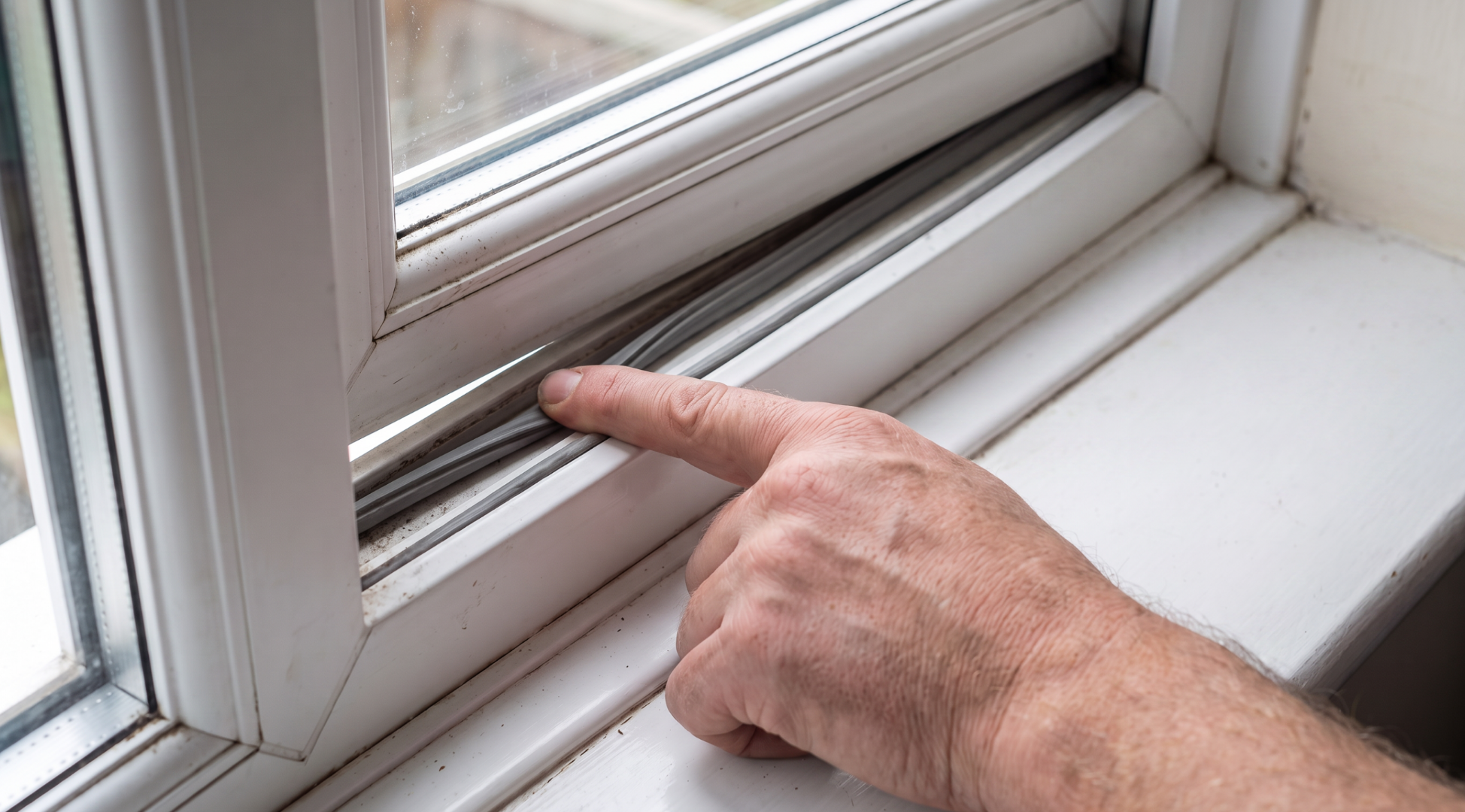
We check the rubber gasket around the frame at the same stage, and replace it if it’s perished. A good seal depends on it as much as the glass.
The new unit is factory-sealed, with fresh desiccant in the spacer bar and an argon gas fill for proper thermal performance. That gives the window its full original insulation performance back.
Once the beads are refitted and the edges are sealed, the window is back to full performance.
On a standard window, we’re usually done within the hour.
Is it worth doing yourself?
Small panes in a low-level window are sometimes a manageable home improvement job for a confident DIYer.
Larger windows are heavier and far easier to crack.
Get it wrong and you’re paying for a second sealed unit on top of the first.
Where DIY replacement goes wrong
Getting the measurements even slightly wrong means a unit that doesn’t fit, and glass is expensive to remake.
Toughened or safety glass is a legal requirement in certain locations, like doors and low-level windows.
Getting that wrong creates a real safety risk in the finished window.
A poorly reseated unit also lets draughts and moisture back in within months, which means doing the job twice.
A proper edge seal around the glass matters as much as getting the unit itself right.
Whether you think you can handle the job or not, we always recommend trusting a professional. This safes you time, money, and potentially safety and energy efficiency.
Check your guarantee first
If your window or door is still under a guarantee from whoever originally fitted it, DIY work on the sealed unit will likely void it.
Check your paperwork or call the original installer before you touch the beads.
For anything above a small, easily reached pane, calling a specialist usually costs less in wasted glass and time than it seems like it would.
We are proud to offer 5 year guarantees on our services, so you know you’re protected.
When you need a full window replacement
At Totalseal, we always prioritise repairs. However, this isn’t always possible.
If the frame itself has cracked, warped, or gone brittle with age, no amount of new glass fixes that.
uPVC and aluminium double glazing frames can lose their structural integrity after 25 to 30 years outdoors.
Upgrading from old single glazing to double glazing for the first time is a full window job too. A single-glazed frame has no sealed-unit cavity to convert.
Changing the window’s style, colour, or opening type as part of a renovation is a job for a window installer, not us. That work means removing the old window completely, not swapping the glass.
If you do need new frames fitted, look for an installer registered with FENSA. It’s the body that certifies window installation work in the UK.
Frequently asked questions about replacing a double glazed window
Is it easy to replace a double glazed window yourself?
Replacing the glass in a small, accessible window is achievable for a confident DIYer with the right tools. Larger or higher windows carry more risk of damage and are better left to a specialist.
Can you just replace one pane of glass in a double glazed window?
No. The two panes and the sealed air gap between them are manufactured as one unit. If either pane fails, the whole double glazed unit gets replaced together.
Can you replace the glass without changing the frame?
Yes, in the vast majority of cases. The frame and the sealed unit are separate components, and swapping the glass leaves the existing frame untouched.
How long does it take to replace a double glazed window?
A standard sealed unit replacement takes under an hour once a specialist is on site. A full frame replacement takes considerably longer and involves more disruption.
What are the signs a double glazed window needs replacing?
Misting between the panes, cracked glass, draughts around the edges, and a noticeable drop in how warm the room feels are the main signs. Most of these point to the glass, so you rarely need to replace anything beyond it.
Get your sealed unit replaced properly with Totalseal
Totalseal Repairs proudly repair and replace sealed units.
We don’t sell or fit full windows, which means we’ve got no reason to talk you into anything bigger than the job actually needs.
With over 30 years’ experience and a 5-year guarantee on every job, we’ve replaced sealed units in windows and doors of every type.
We cover the whole of Central Scotland, and can also fix broken or malfunctioning window handles.
If you’re not sure whether your window needs new glass or something more, we’ll take an honest look and tell you straight.
Call us today 07977 463 139 for a free, no-obligation quote.