Blown Window vs Condensation: How to Tell The Difference
There’s moisture on your window and you’re not sure what it means. Is it condensation that’ll clear on its own, or has the window blown and you’re looking at a repair job?
The answer is easier to find out than most people realise, and it all depends on exactly where the moisture is. That one detail tells you almost everything you need to know, and it’s easy to check once you know what to look for.
What condensation on windows is – Guide by Edinburgh double glazing repair experts
Air is full of moisture. And nearly everything you do in your home releases water into the air.
From cooking, showering, to drying clothes inside, and even breathing, all adds water vapour into the air.
When air hits a cold surface (like your window), it condenses into visible water droplets.
Condensation on windows is extremely common in Scotland, particularly through autumn and winter when the temperature difference between indoors and outdoors is at its greatest.
Cold, damp weather outside, combined with your warm central heating inside, creates the perfect conditions for it.
Three places moisture can appear on your windows
Where you see the moisture matters more than the moisture itself. There are three possibilities, and each one means something different.
On the inside surface
This is one of the most common types of condensation you will see.
Water droplets or a film of moisture on the interior face of the window glass, the side you can touch from inside the room. It’s usually the worst in kitchens, bathrooms, and bedrooms, where humidity tends to be highest because of cooking, showering, and sleeping.
Interior condensation is typically a ventilation and humidity issue.
It doesn’t mean your window is faulty. It means there’s too much moisture in the air for the ventilation to cope with.
Easy fixes are making sure to open your windows to release the moisture filled air, using extractor fans when showering and cooking, and investing in a dehumidifier if you think it is a concern.

On the outside surface
This one surprises people. You wake up, and the outside of the glass is covered in moisture, almost like the window is sweating outwards. It tends to happen on still, clear mornings in spring and autumn.
Good news! Exterior condensation is actually a sign that your double glazing is doing its job well. It means the outer pane is staying cold (because the Low-E coating is keeping the heat inside), and the cool morning air is condensing on it.
It should be clear as the day warms up and needs no attention whatsoever.
Between the two panes of glass
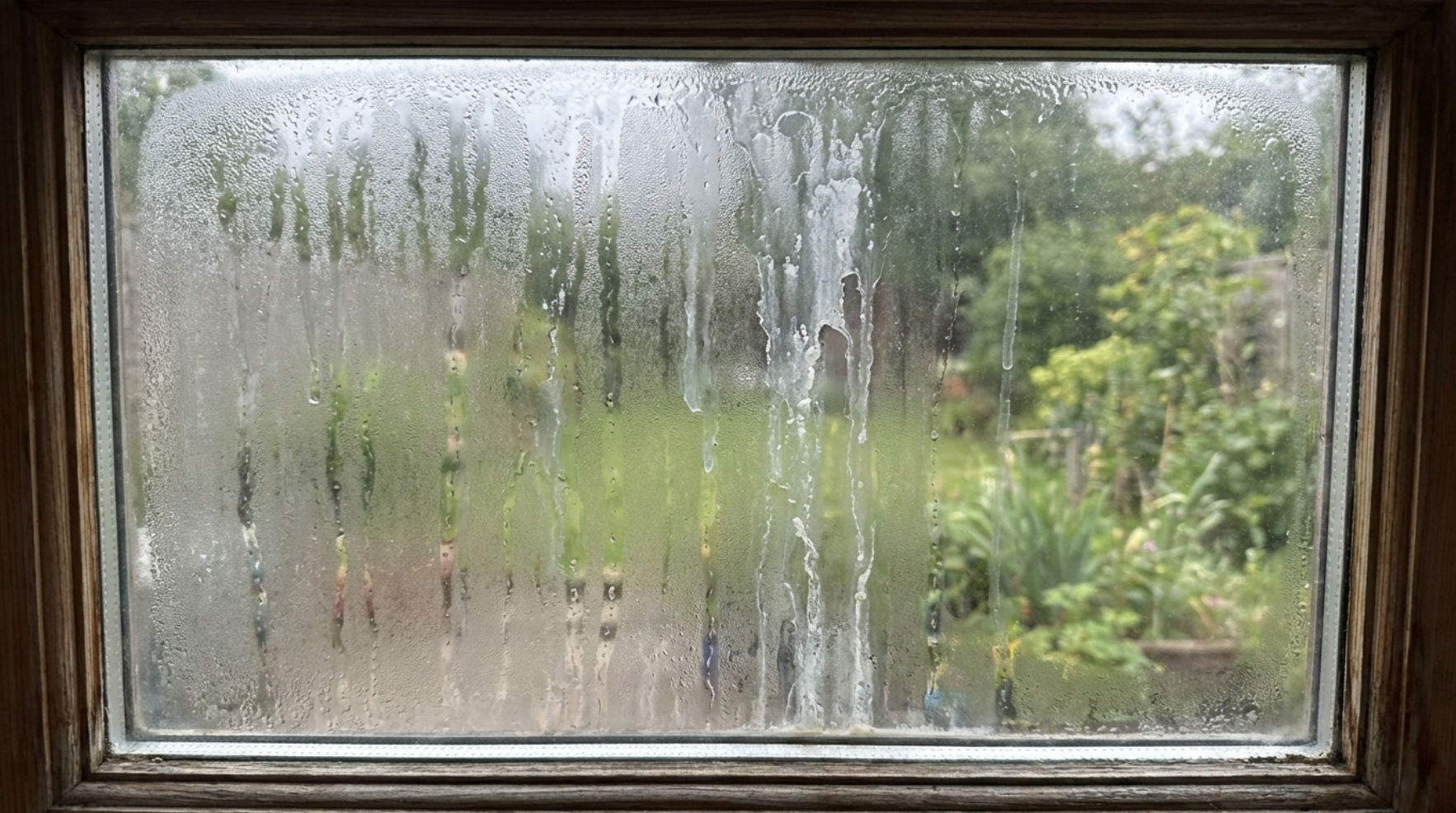
If you can see haze, fog, or moisture trapped between the two sheets of glass and you can’t wipe it from either side, the sealed unit has failed.
This is going to need professional attention to restore your home’s energy efficiency.
What is a blown window?
A “blown” window (also known as a misted window) is one where the sealed unit has failed. We talk about blown windows a lot at Totalseal Repairs, but here is what is actually happening to the glass when it occurs.

A double glazed window is made up of two panes of glass separated by a spacer bar around the edges. The gap between the panes is filled with dry air or an insulating gas (usually argon), and the whole thing is sealed airtight at the edges.
Inside the spacer bar, there’s a desiccant. This is a moisture-absorbing material that soaks up any tiny amount of humidity that was trapped during manufacturing.
Over the years, the seal around the edges degrades. UV light, temperature changes (the glass expands and contracts every day as it heats up and cools down), general ageing, or a faulty unit can all take their toll on your glazed units.
Harsh cleaning chemicals sprayed directly onto the seal can speed it up too.
Once the seal breaks down, damp outside air starts to creep into the gap between the panes. The desiccant absorbs what it can, but once it’s saturated, there’s nothing left to catch the moisture.
That’s when you start seeing misting, fogging, or visible water between the glass which never fully goes away.
How to tell the difference between a blown window and condensation
The simplest test takes about five seconds to do. Simply, run your finger across the moisture on the glass.
If you can wipe it off from the inside of the room, it’s interior condensation. If you can wipe it off from the outside, it’s exterior condensation. Both are surface moisture and neither means your window has blown.
But if you can see the moisture but can’t reach it from either side, it’s between the panes. That’s a blown sealed unit.
There are a few other signs that a window has blown, even on days when the misting isn’t obvious. Hold a torch up to the glass at night and look for a cloudy or milky appearance.
In daylight, look across the glass from an angle and check for streaky marks, water trails, or a dull film that wasn’t there before. These are mineral deposits left behind by moisture that has repeatedly condensed and evaporated between the panes.
A blown window may also feel noticeably colder to the touch than your other windows, because the argon gas that was insulating the gap has escaped and your double glazing isn’t doing its job of insulating your home.
What causes a window to blow
Most sealed units fail because of age.
A well-made double glazed unit typically lasts 15 to 20 years before the seals start to give way, though it can be longer or shorter depending on quality, exposure, and how much direct sunlight the window gets.
South-facing windows tend to fail sooner.
They get more UV exposure and more extreme temperature swings between direct sun and shade. The constant thermal cycling weakens the seal faster.
Poor original installation can also play a part.
If the unit wasn’t seated properly in the frame, or if the drainage holes at the bottom of the frame are blocked, water can sit against the seal and break it down from the outside.
We see this fairly often in older properties where the frames haven’t been maintained properly.
Using strong chemical cleaners or pressure washers directly on the window seals is another common cause. The chemicals attack the sealant material, and the high pressure can force water past the seal before it’s fully failed.
Problems of ignoring a blown or misted window
A blown window isn’t going to fix itself, and it does get worse over time.
The obvious problem is the misting. What starts as a faint haze can progress to heavy fogging that blocks your view entirely on cold days.
The less obvious problem is heat loss. Once the argon gas has escaped, the window’s thermal efficiency drops. The gap between the panes is now filled with ordinary air (and moisture), which doesn’t insulate nearly as well.
You’ll notice it as a cold spot near the window and, over time, as higher heating bills.
In some cases, a badly blown window can contribute to damp around the window frame. The constant cycle of moisture condensing and evaporating inside the unit can allow dampness to migrate into the surrounding frame and wall, particularly in older homes.
Can a blown window be repaired
Yes, and not to worry, it’s nearly always a sealed unit replacement rather than a new window.
When a window blows, the problem is the glass unit, not the frame. The uPVC frame, the hinges, the handles, and the locking mechanism are usually all perfectly fine. Replacing the entire window because the sealed unit has failed is like buying a new car because of a flat tyre.
The double glazing repair specialists at Totalseal Repairs carefully remove the glazing beads (the strips of uPVC that hold the glass in the frame), lift out the old unit, and fit a brand new sealed unit in its place.
The new unit comes with fresh desiccant, a proper factory seal, and an argon gas fill for better thermal efficiency.
The whole process typically takes less than a few hours per window. The frame stays exactly where it is and continues to match the rest of your property, and the window looks and performs like new afterward.
We fit all replacement sealed units with a 5-year guarantee. If there’s any issue with the new unit within that time, we’ll come back and sort it for you hassle-free.
How to reduce condensation on your windows
If your windows haven’t blown and the condensation is on the interior surface, it’s a ventilation issue that you can manage.
Open trickle vents if your windows have them. These small vents at the top of the frame allow a steady flow of air through the room without creating a noticeable draught, and they make a real difference to moisture levels.
Run extractor fans when you’re cooking or showering. A bathroom extractor fan should run for at least 15 minutes after you’ve finished showering to clear the steam properly. In the kitchen, use the cooker hood while pans are on the hob.
Avoid drying clothes on radiators if you can, especially near windows. A full load of wet washing releases litres of moisture into the air as it dries.
If you don’t have a tumble dryer, try to dry clothes in a room with good ventilation and keep the door closed so the moisture doesn’t spread through the house.
A dehumidifier is worth considering if you’re seeing heavy condensation regularly. Keeping indoor humidity between 40% and 60% is the range where you’ll be comfortable without excessive moisture on cold surfaces.
But if the moisture is between the panes, none of this will make any difference. That’s a blown window, and it needs a new sealed unit. Always get a professional to fix this.
When to call the Totalseal Repairs team
If you’ve done the wipe test and the moisture is between the glass, the sealed unit has failed and needs replacing. It won’t clear up with better ventilation or a dehumidifier, and leaving it just means living with a foggy, poorly insulated window that keeps getting worse.
Totalseal Repais replaces blown and misted sealed units in windows, doors, patio doors, and conservatories across Central Scotland, covering Glasgow, Falkirk, Stirling, Edinburgh, North Lanarkshire, and West Lothian. With over 30 years in double glazing repairs, we are more than capable to handle the task at hand. Before starting any job, we’ll always give you an honest assessment of what needs doing and what doesn’t as well as any costs involved so you have the full picture before agreeing to the job.
Call us today on 07977 463 139 or 01324 468 337 for a free, no-obligation quote.