
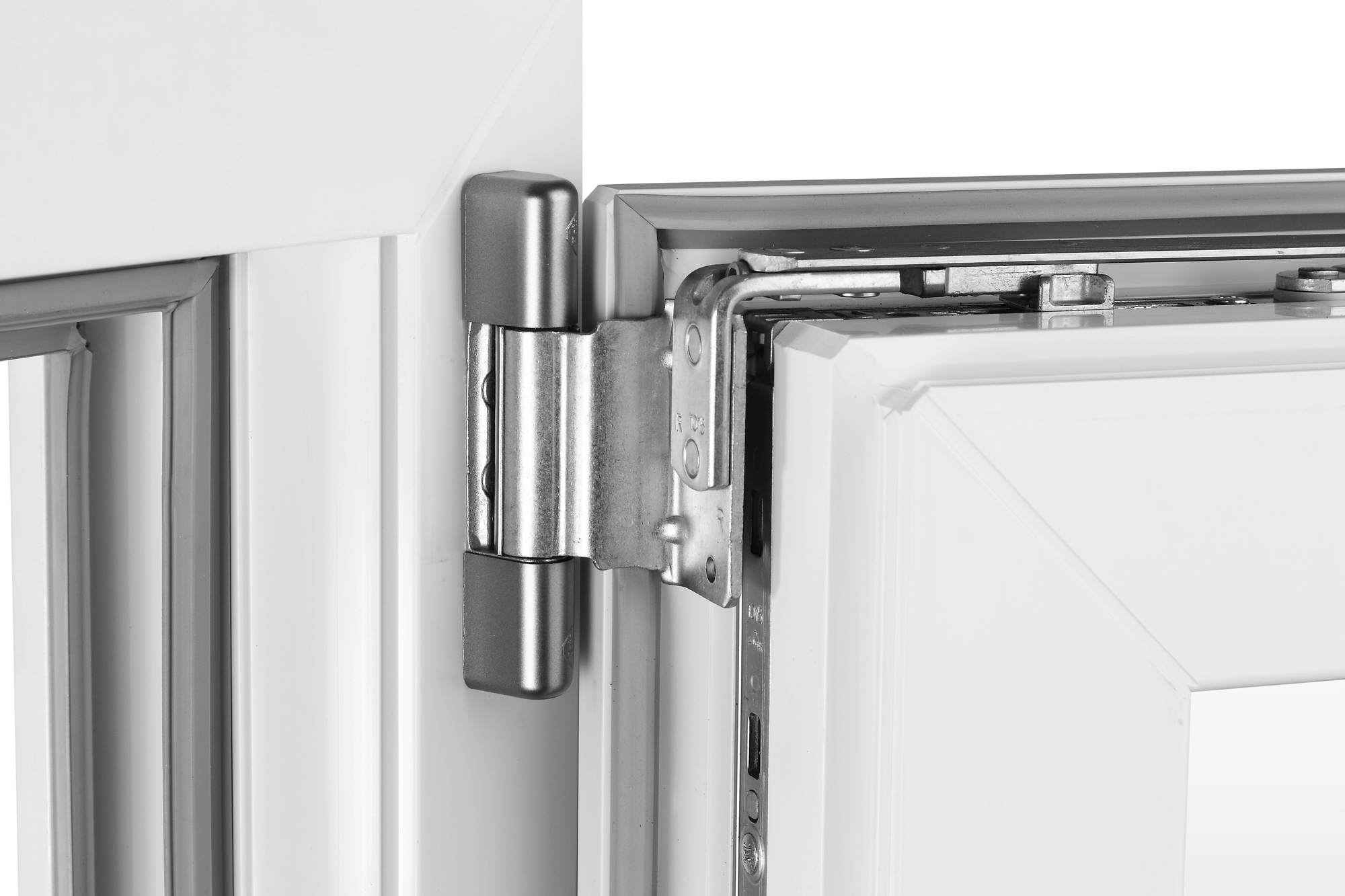
How to Tighten a uPVC Window Hinge
A window that bangs against the frame every time a gust catches it usually just needs the hinge tightened, and on most uPVC casement windows a screwdriver sorts that without a call-out.
This guide covers how to tighten the friction stay hinge itself: finding the adjustment screw, turning it the right way, and testing the result.
What you’re adjusting when you tighten a friction hinge -By Edinburgh’s double glazing repairers
Most uPVC casement windows open on double glazed sashes hung from a friction stay, a metal arm that connects the sash to the frame and holds the window open at whatever angle you set it to.
The friction in “friction stay” comes from tension built into the hinge itself, not from the window handle or the locking mechanism that keeps the window shut once it’s closed.
Why the screw controls tension
A small screw sits along the side of the friction stay arm, usually near the hinge where it meets the frame.
Turning that screw squeezes the metal plates inside the hinge together, which increases the resistance holding the sash in place.
Loosen it and the window swings more freely but won’t hold its position.
Tighten it and the window gets harder to move, but stays exactly where you leave it, useful on a windy day when a gust would otherwise catch it.
Tools you need to adjust uPVC window hinges
A cross-head screwdriver handles most uPVC casement windows, as the adjustment screw usually takes a Phillips head.
Some hinges use an Allen key instead, and German-pattern hardware occasionally takes a Torx bit, so having a small mixed set on hand as a backup saves a second trip.
Check the screw head before you start turning.
Forcing the wrong driver into it can round off the head and leave you with a screw that won’t grip either tool.
Nothing else is needed for the job.
It takes only the right screwdriver and a few spare minutes, with no lubricant or replacement parts involved.
Step-by-step: tightening a loose window hinge
Open the window fully
Swing the window open as far as the friction stay allows, then hold it steady instead of letting it hang under its own weight.
This gives you clear access to the full length of the hinge arm and stops the sash swinging back while you work.
It is a good chance to also inspect the condition of the internal and external window sill for damages.
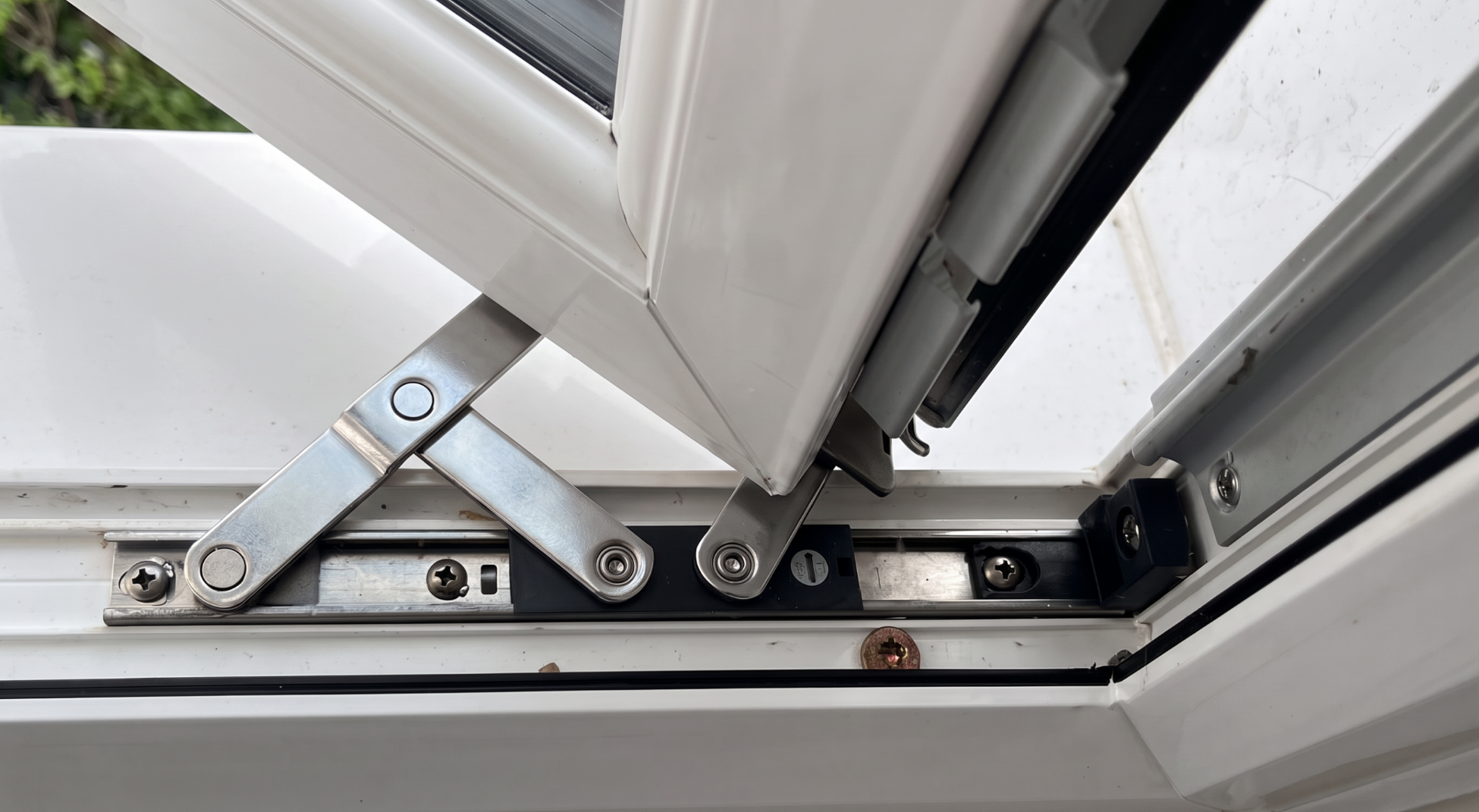
Find the adjustment screw
Look along the friction stay arm, the metal bar running from the hinge to the sash, for a small screw set into the side of it.
On most casement windows it sits near the pivot point closest to the frame, though the exact position varies between manufacturers.
A little grime or old grease often hides it, so feel along the arm with a finger, not just by eye.
If you can’t see one on the main arm, check the bottom hinge and the top hung fitting separately, because some windows carry a second adjustment point there.
Turn the screw clockwise to tighten
Turn the screw clockwise in small increments, a quarter turn at a time, instead of cranking it as far as it will go.
Test the window’s movement after each turn so you can feel exactly when the tension is right.
Overtightening strains the hinge and makes the window hard to open, so stop as soon as the sash holds its position without excess force.
Test through a full open and close cycle
Open and close the window several times, checking that it moves smoothly and doesn’t catch on the frame at any point.
Check the window sits flush when closed too, with an even gap around the whole frame, not a wider gap on the hinge side.
Fine-tune if it’s still not right
The window may still feel too stiff after tightening, which usually just needs a small turn back the other way.
The goal is firm resistance, not maximum tension, so work in minor adjustments either direction until the window opens and closes smoothly and holds wherever you leave it.
When you need to adjust uPVC windows a different way
Tightening only works if the hinge arm itself is straight and undamaged.
A screw with nothing left to grip, or a window that’s still loose at full tension and won’t open or close properly, usually means the friction stay on your uPVC window frames has worn out rather than simply loosened.
Signs you need new hinges instead of an adjustment
A hinge arm that’s visibly bent, twisted, or cracked won’t hold tension no matter how far you turn the screw, and forcing it risks snapping the arm entirely.
The same goes for a uPVC window that has dropped at the hinge side, which usually points to a worn pivot, not a loose one.
Butt hinges and older cockspur-style windows sometimes lack an adjustment screw altogether, in which case tightening isn’t an option and full replacement is the only fix.
If you’re not sure which type you have, sending us a photo is quicker than guessing.
Keeping the hinge from loosening again
Check the screws on the hinges once a year, ideally when you’re cleaning the windows anyway.
A quarter turn now and then stops the problem building up, and draughts and heating bills often creep up gradually as a hinge loosens, long before the window feels obviously wrong.
Grime around the hinge arm makes it work harder and loosens the tension faster, so a wipe with a damp cloth during your usual window clean keeps the mechanism moving as it should.
Poor sealing around the frame is sometimes blamed on the seals themselves when a loose hinge on the same side is the real cause.
Central Scotland’s weather doesn’t help either, since a hinge left loose through a wet, windy winter tends to loosen faster than one on a sheltered window.
A heavier glazed unit puts more strain on the hinge over time too, so larger double glazed sashes benefit from a slightly more frequent check than small ones.
uPVC window hinge questions answered
Are uPVC window hinges adjustable?
Yes, on almost all modern casement windows. Friction hinges carry an adjustment screw that controls how much tension holds the sash in position, and a simple hinge adjustment is usually the first fix to try before assuming the hinge has failed.
Which way do I turn the screw to tighten a hinge?
Clockwise increases tension on nearly all uPVC friction stays, while anticlockwise loosens it. Turn in small increments and test the window between each turn rather than making one large adjustment.
Why won’t my window close tight on the hinge side?
A gap on the hinge side that isn’t present elsewhere around the frame usually means the friction stay has loosened enough to let the sash drop slightly. Tightening the adjustment screw often closes that gap without needing anything replaced.
Can I adjust the hinges myself, or should I call someone?
Tightening a friction stay is a straightforward DIY job with a screwdriver and a few minutes. Call a specialist once the hinge is visibly bent, the screw won’t grip, or the window still won’t hold its position at full tension.
How do I know if a hinge needs replacing instead of adjusting?
If the arm is bent, cracked, or corroded, or the adjustment screw spins without any effect, adjusting won’t help. New hinges are the only fix once the metal itself has failed, not just loosened.
Still not sitting right? Let us adjust the hinge for you
A hinge that stays loose after tightening, or one that’s visibly damaged, is best left to someone who fits replacement window hinges regularly, rather than another Saturday spent guessing.
We carry stock for most uPVC window types across Central Scotland, and every job comes with a 5-year guarantee.
Our window repair team can also check whether a stiff handle or a draughty seal on the same side points to the hinge as the real cause.
Call 01324 468 337 or get in touch through our contact page for honest advice and a free, no-obligation quote.