
How to Open a Broken Window Lock
A window handle that spins freely without doing anything, or a window that won’t budge even though you’ve turned the key, points to the same underlying problem.
Something inside the lock has broken, not just jammed.
If it’s a fire escape route or the only window you can reach to let air in, it’s a big problem.
Luckily, most broken window locks open safely with the right approach, no glass or frame damage required.
Signs your window lock has failed – Written by Edinburgh’s double glazing experts
The clearest way to tell whether your window lock is broken, rather than just jammed, is how the handle behaves when you turn it.
A handle that turns with no resistance and no click is the classic sign the mechanism inside has disconnected from the handle spindle.
Nothing you do at the handle end will fix that on its own.
A handle that won’t turn at all, or turns halfway and stops, usually means the mechanism itself is seized or the locking points have jammed against the keeps. That calls for freeing the mechanism rather than checking the spindle.
A swollen or sticking seal between the sash and the frame can hold the window shut even after the lock has released. People often mistake for a faulty window lock when the hardware is actually fine.
What’s broken inside the mechanism
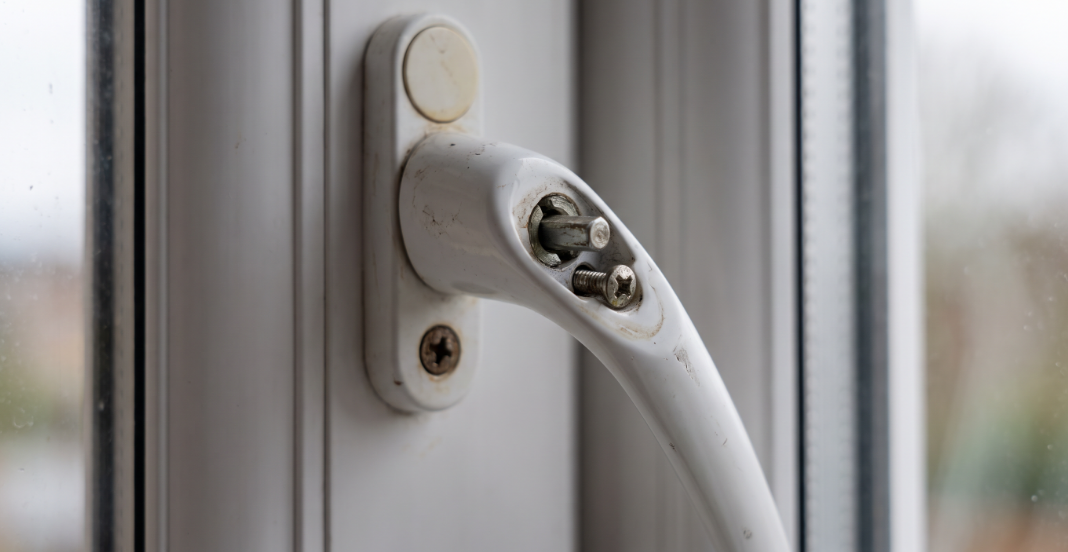
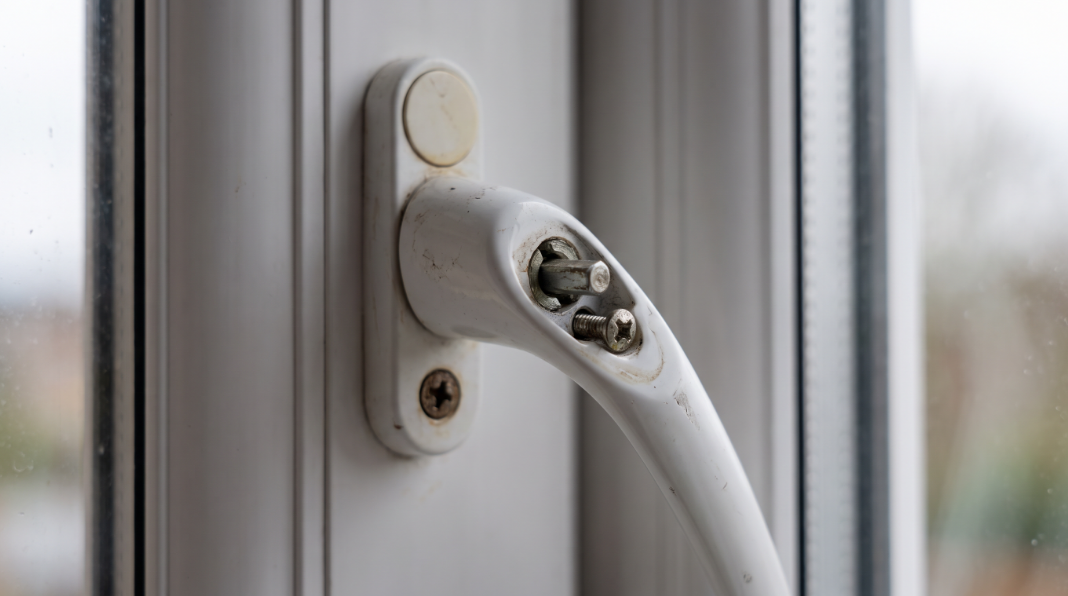
Behind the handle sits a metal spindle that connects to the gearbox, the locking mechanism tucked inside the window’s edge.
Turn the handle and the gearbox drives locking points out into keeps fixed to the frame, then turn it back and the same gearbox draws them in again to unlock the window.
The spindle, a soft metal bar designed to be easy to replace, is often the weak point.
Years of turning wear the square hole round or snap it clean through. A worn or snapped spindle can no longer grip the handle, so the handle spins without engaging anything.
The gearbox itself can seize internally from old grease turning to grime, or from a house settling slightly over the years and pulling the window frame out of true.
This leaves a visible gap between the window and the frame on one side.
When that happens, the locking points no longer line up with the keeps at all.
A damaged or rotten sill underneath the window is sometimes behind that kind of movement too.
Water tracking in behind a failed sill seal can rot the timber sub-frame the whole window sits on, and a sub-frame that’s shifted even slightly pulls the locking points out of line with their keeps.
Sill repair isn’t something we handle directly, but if that’s what’s driving the fault, we’ll tell you honestly rather than adjusting a lock that keeps drifting back out of alignment.
How to open the window safely right now
The safest way to open a locked window when the handle won’t cooperate is to work out which part has failed first, rather than forcing anything.
Check the handle and spindle first
Turn the handle gently and fully in both directions rather than forcing it one way, and tap the frame lightly near each keep with your palm to unseat any grit holding a locking point.
If the handle spins loose with no resistance, the spindle has likely failed.
Most uPVC handles are held on by two screws under a small cover cap: unscrew them, remove the handle, and check whether the spindle is bent, rounded off or snapped inside.
Adjust the keeps or lubricate the mechanism
If the window won’t sit flush in its frame, the keeps might just need adjusting. Each keep usually has a small screw or slot for an allen key.
Loosen it slightly and it gives the locking point room to find its own position and open the window.
A light silicone lubricant on the visible moving parts, the keeps, the gearbox edge and the hinges, often frees a mechanism that’s simply gummed up rather than broken.
Insert the nozzle into the mechanism track if you can reach it and work the handle through its full range a few times.
Check whether it holds the window in the open position afterwards.
If none of that shifts it and the window still won’t open, stop there rather than escalating the force.
What not to do with a faulty lock
A hacksaw through the frame, pliers on the gearbox, or a hammer to knock a stuck sash loose all turn a repairable lock into a window that needs replacing entirely.
Using a screwdriver as a lever against the frame edge is just as risky.
uPVC cracks and chips under leverage far more easily than it looks, and a scraper or paint scraper forced into the gap does the same damage from a different angle.
Removing the glass to reach the mechanism from inside is sometimes suggested online as a last resort. But it’s a dangerous shortcut for anyone without the right tools and training, and it usually causes more damage than the mechanism repair it was meant to avoid.
If the safe steps above don’t open the window, stop and call someone rather than improvising further.
When it’s a job for a specialist
A sheared spindle or a seized gearbox both need the faulty part replaced, not repaired.
Getting the right replacement means matching the exact mechanism to your window’s make.
Swapping the whole mechanism is usually a fast job for a specialist, often done in one visit without removing the window from its frame.
Sourcing the part yourself is the harder step, since uPVC hardware isn’t standardised across manufacturers.
Keeps that are badly misaligned from a settling frame are worth a second look too. A specialist can usually resolve that with adjustment alone.
If the frame itself has shifted enough to affect the seal as well as the lock, it needs a full frame assessment rather than a lock adjustment on its own.
Frequently asked questions
Can I open a uPVC window without the handle?
Sometimes, if the locking points haven’t fully engaged, by gripping the exposed spindle stub with pliers and turning gently. It’s not reliable and it’s easy to round off the spindle further, so if you still can’t open it this way, treat that as a one-off and get the handle sorted properly afterwards.
What tools do I need to try this myself?
A cross-head screwdriver for the handle screws, an allen key set for the keeps, and a silicone-based lubricant cover most safe DIY fixes. You shouldn’t need anything beyond that for the steps above.
How do I know if it’s the spindle or the gearbox?
A handle that spins with zero resistance almost always means the spindle. A handle that’s stiff, grinding or stuck partway through its turn points to the gearbox instead.
How can I stop this happening again?
A yearly check, lubricating the moving parts and testing every handle and keep, catches most faults early, before the lock breaks completely and needs replacing.
Get your window lock fixed properly with Totalseal Repairs
A broken window lock is a security problem as much as an inconvenience, and it’s exactly the kind of job Totalseal handles every day across Central Scotland.
We repair or replace the locking mechanism, gearbox, spindle and upvc window handle itself, all backed by our 5-year guarantee.
If the keeps or window frame have shifted out of alignment, we’ll adjust or replace those too rather than needing to replace the window entirely when a repair does the job.
Call 01324 468 337 for a free, no-obligation quote. We prioritise broken locks as a security issue, so if you’re locked out or can’t secure a window, tell us and we’ll get to you fast.